• News
  • About
  • Sound
  • Vision
  • Pin Ups
  • Shop
    • US Store
    • EU/UK Store
  • Connect
David Bowie
  • News
  • About
  • Sound
  • Vision
  • Pin Ups
  • Shop
    • US Store
    • EU/UK Store
  • Connect

LAZARUS OPENED TEN YEARS AGO TODAY

“By the time I got to New York...”

LAZARUS by DAVID BOWIE & ENDA WALSH

Directed by IVO VAN HOVE

Inspired by the novel The Man Who Fell to Earth by WALTER TEVIS

Following nearly three weeks of previews, public performances of Lazarus began ten years ago this evening at the New York Theatre Workshop (NYTW).

David Bowie attended the opening night, and it was to be his final public appearance.

See the official Bowie socials (FB, IG, X) for a random selection of pictures, including photos from rehearsals, the opening night, and images we used at the time for the build-up and reviews.

Image of Bowie at Lazarus rehearsal taken by Jan Versweyveld.

#Lazarus #Lazarus10 #LazarusNYTW #TJNewton #TMWFTE

tags: 2025 November
Sunday 12.07.25
Posted by Mark Adams
 

STATION TO STATION 50TH ANNIVERSARY VINYL DUE JANUARY

“The return of the thin white duke...”

DAVID BOWIE ’STATION TO STATION’ 50th ANNIVERSARY HALF-SPEED MASTERED LP 50th ANNIVERSARY PICTURE DISC LP WITH POSTER

LIMITED EDITION RELEASES AVAILABLE 23rd JANUARY 2026 ON PARLOPHONE - Pre Order here.

23rd January 2026 marks the 50th anniversary of the release of David Bowie’s tenth studio album, STATION TO STATION.

On the exact day of its Golden Jubilee, STATION TO STATION will be issued as a limited edition 50th anniversary half-speed mastered LP and a picture disc LP pressed from the same master with a reproduction of a poster used to advertise the album 50 years ago.

The album saw Bowie relocate to Cherokee Studio in Los Angeles and incorporate elements of his 'Plastic Soul’ period, coupled with much more experimental elements, which would become more prevalent over his next couple of albums. The first single from the album GOLDEN YEARS, released in November 1975, would give Bowie a top ten single on both sides of the Atlantic. The second single, TVC 15, would, a decade later, be heard and seen by almost 2 billion people when Bowie chose it to open his set at Live Aid.

The sound of STATION TO STATION was partly influenced by Bowie’s burgeoning interest in the electronic music and driving rhythms of bands coming out of Germany, such as NEU! and Kraftwerk, most notably on the ten-minute title track, while still embracing dancefloor-friendly grooves in songs such as STAY and GOLDEN YEARS.

Harry Maslin, who had worked with Bowie on some of the tracks on his previous album, YOUNG AMERICANS, was chosen as Bowie’s co-producer. They entered the studio in September 1975 with a tight stripped-down band featuring Carlos Alomar & Earl Slick on guitars, George Murray on bass, Dennis Davis on drums, David’s Childhood friend Geoff MacCormack (under the nom de plume Warren Peace) on backing vocals and on loan from Bruce Springsteen’s E-Street Band, Roy Bittan on piano and organ. Maslin has since said that the vocals on the standout track WILD IS THE WIND and GOLDEN YEARS were both Bowie’s first takes.

Ten days after the album’s release, David started the ISOLAR TOUR, which visited over 65 dates in 11 countries and is cited as being hugely influential for its use of banks of fluorescent white light set against black backdrops. At the end of the tour, Bowie started work on Iggy Pop’s debut solo album, The Idiot, when the pair and producer Tony Visconti moved to Berlin to mix the record. David settled there, ready to begin his next groundbreaking musical adventure.

This new pressing of STATION TO STATION was cut on a customised late Neumann VMS80 lathe with fully recapped electronics from 192kHz restored masters of the original Record Plant master tapes, with no additional processing on transfer. The half-speed was cut by John Webber at AIR Studios.

DAVID BOWIE - STATION TO STATION - TRACKLISTING

SIDE ONE

Station To Station

Golden Years

Word On A Wing

SIDE TWO

TVC 15

Stay

Wild Is The Wind

#StationToStation50

tags: 2025 November
Thursday 11.20.25
Posted by Mark Adams
 

★ BLACKSTAR SINGLE IS 10

“In the centre of it all, Your eyes...”

Ten years ago today, following the video premiere the day before, the ★ Blackstar digital single was released.

Jason Draper has written an in-depth piece regarding the recording and release of the track: ★ (‘Blackstar’): Behind The Cryptic Song That Announced Bowie’s Stellar Final Phase

As usual with Jason’s work, it’s a very well researched piece, keep reading for the full thing.

Watch Johan Renck’s remarkable video here:

#BowieBlackstar #Blackstar10thAnniversary

+ - + - + - + - + - + - + - + - + - + - + - + - + - + - +



★ (‘Blackstar’): Behind The Cryptic Song That Announced Bowie’s Stellar Final Phase

The title track to David Bowie’s final album, ★ (‘Blackstar’) demanded attention yet evaded all attempts at scrutiny…

By Jason Draper

When ★ (pronounced “Blackstar”) lit up an otherwise uneventful autumn day in 2015, it served notice of another bold new direction for David Bowie. Running just shy of ten minutes, it was Bowie’s second-longest song, after ‘Station To Station’, and it contained more than enough invention to tide fans over until the release of its parent album, scheduled to hit the shelves a little under two months later. Also picked as the opening song and title track of what would become Bowie’s final record, ★ shouldered a great responsibility – one which Bowie knew it could carry with ease.

“The one thing I think is important is to not go into any second guessing or analysing what these images mean, because they’re between you and me,” Bowie told Johan Renck, the director of the ★ video. “People are going to go head over heels to try to break it down and figure it down across the spectrum, and there’s no point in even engaging that.”

And yet, in wrapping knowing references to his past within a jazz-infused sound that found him exploring new territory, Bowie all but challenged fans to seek meaning in the song. “You make of it whatever the fuck you want,” Renck told CBC Music. “I’m not going to push any of my ideas onto you.”

The recording: “It might even have been the first take”

The ★ album sessions had been underway for two months before Bowie tackled the record’s title track. Working incognito at New York City’s The Magic Shop studio with saxophonist Donny McCaslin and his acclaimed jazz ensemble, which included keyboardist Jason Lindner, bassist Tim Lefebvre and drummer Mark Guiliana, plus auxiliary guitarist Ben Monder, Bowie and his longtime producer Tony Visconti laid down the song’s backing track in a single day, 20 March 2015.

“We recorded it pretty quickly – it might even have been the first take,” McCaslin told this author, in an interview for ‘Record Collector Presents: Bowie: Blackstar: 1981-2016’. Having received Bowie’s home demo recordings in advance, the musicians arrived at the studio prepared to lay down a song that featured two disparate sections: one characterised by propulsive drumming and funereal saxophone, the other by elegiac synths and spectral guitar. They were also ready to meet the challenge of connecting the two by coming up with an experimental segue that Bowie trusted them to devise on the spot.

“We had all learned our parts,” McCaslin confirmed in his ‘Record Collector’ interview. “We’d gotten together and rehearsed once, and we all knew what we were going to do.” Indeed, when it came to the improvised passage, the group members were so in tune with each other that they nailed it in one take.

“I would describe the band at that time as exploring the intersection between improvisation, drum’n’bass and ambient electronica music as we understand it,” McCaslin said. “And that last [session], in March, was when Ben came in. He was killing it, adding that atmospheric stuff in the middle.”

“Somehow we did that dissolution perfectly on the first attempt, and that’s what you’re hearing on the album – no punching-in or anything,” Monder told ‘Premier Guitar’. “We did the middle section separately, but the way it all dissolves into it was totally improvised.”

With overdubs – including strings, guitar and McCaslin’s flute parts – being added at a later date, and Bowie recording his vocals at Human Worldwide Studios across a handful of days in April and May, the song had a depth and scope that demanded careful attention at the mixing stage. Impressed by the work of engineer Tom Elmhirst, who’d mixed Kendrick Lamar’s similarly dense and expansive ‘To Pimp A Butterfly’ album, Bowie and Visconti took the ★ recordings to Elmhirst’s facilities at Electric Lady Studios and enlisted him to help with the record’s final mix.

Despite telling Grammy.com that the process was “quite painless… because it was recorded and produced so well”, Elmhirst was forced out of his comfort zone by the title track. “It took a couple of days, which for me is quite long,” he admitted. “Obviously, not a lot of people put out ten-minute singles. So you have to approach it slightly differently. You can’t give it all away too early. You have to allow the natural dynamics to come through.”

Recalling the first time that he heard the finished recording, which morphed through skittish drum’n’bass, louche balladeering and doomy free jazz while maintaining an improbable cohesion, McCaslin “felt a range of emotions”, he told ‘Record Collector’. “There were definitely tears of joy, of: this sounds fucking great. And also the recognition that it really is what we played together in the studio… I could really hear the layers. There’s a lot in there.”

The release: “Putting it out as a single – that’s pretty ballsy”

Although the recording originally ran past the 11-minute mark, Bowie trimmed the finished track to nine minutes and 58 seconds, in adherence with iTunes’ guidelines – what Visconti would describe as a “bullshit” rule that limited a single’s running time to ten minutes. “But David was adamant it be the single,” Visconti told ‘Rolling Stone’, “and he didn’t want both an album version and a single version, since that gets confusing.”

In the event, listeners found track length to be the least puzzling thing about ★ when its video premiered on 19 November 2015, the day before the single’s release and six weeks ahead of the album with which it shared its name. To ‘The Telegraph’ it was an “avant jazz sci-fi torch song” deserving of a full five marks out of five, while ‘Pitchfork’ piled on the descriptors when they praised it as a “wonderfully odd and expansive… ten minutes of interstellar art-rock and ritualistic chanting and melodramatic balladry and even some playful funk”.

Speaking to ‘Mojo’ magazine, bassist Tim Lefebvre was rather more succinct: “Putting it out as a single – that’s pretty ballsy.”

With its structural complexity and genre-defying shifts in style, not only was ★’s music a challenge to the pop single format, but its lyrics, too, demanded more than average engagement from a listener. True to Bowie’s prediction that fans would scrutinise the song for meaning, the internet was soon flooded with attempts to decode everything from its title on down to Bowie’s nod to his own shape-shifting past (“I’m not a gangstar/… I’m not a flam star”), with each new theory spawning multiple alternatives. As ‘Pitchfork’’s Ryan Dombal noted in his review of the ★ album, such labour only played into Bowie’s cheerful “poking fun at our need to explain the inexplicable while remaining as perplexing and powerful as ever”.

Among the countless hypotheses were those that traced links to Bowie’s sci-fi interests (Black Star was an ancient Judaeic name for Saturn and an alternate term for a black hole) and to Elvis Presley, with whom Bowie shared a birthday and whose 1960 song ‘Black Star’ mused on mortality (“Every man has a black star/A black star over his shoulder/And when a man sees his black star/He knows his time, his time has come” the ‘King Of Rock’n’Roll’ sings). Meanwhile, “the villa of Ormen” – originally rendered “all men” in Bowie’s handwritten lyrics – was found to be rife with allusions – to a Norwegian village, a Viking longship and the Swedish word for “serpent” – and further lyrical references to birth, execution and the swapping of spirits spurred a hunt for clues as to Bowie’s feelings about his own death, particularly when fans heard that he had passed on 10 January 2016, just two days after the ★ album’s release.

As if anticipating the scrutiny, Bowie left signposts to his past, repeating the lyric “At the centre of it all” in ★’s opening verses, doubtless in the knowledge that fans would recognise the phrase from its use in the similarly portentous song ‘Slow Burn’, from his 2002 album, ‘Heathen’. ★’s promo video would contain similar Easter eggs, even as its visuals compounded complications for the would-be sleuth.

The video: “His ideas are deep and founded and interesting”

Opening with shots of a dead astronaut on an unnamed planet experiencing a solar eclipse, the ★ promo was directed by Johan Renck, the Swedish filmmaker who had already made dramatic use of the song when a bespoke edit played over the opening credits of Renck’s TV crime drama The Last Panthers. To Renck, the dead astronaut – whose skull is encrusted with jewels and salvaged for use in a mysterious ceremony – was “100 per cent Major Tom”, while dancers in the video also briefly mimicked gestures made by club-goers in an altogether different Bowie promo, the David Mallet-helmed ‘Fashion’.

The dancers’ ritualistic movements, choreographed by Kira Alker and Elke Luyten of the dance company Zus Performance, were inspired by an unlikely source: a quirky animation trick employed in vintage ‘Popeye’ cartoons, in which stationary characters appeared to vibrate. Bowie’s own drawings also provided guidance for the promo, which, as well as cutting between enactment of the ceremony and shots of writhing scarecrows affixed to crosses, found Bowie playing the roles of three distinct characters, one for each section of the song.

There was, Renck told ‘Vice’, Button Eyes, who, wearing bandages over his face, with two black buttons where his eyes would be, is “introverted, a sort of tormented blind guy”. Then there was “a flamboyant trickster in the middle of it, selling us the message in the other part of the song”, and also “the priest guy” who appears silently brandishing a time-worn book embossed with a black star, as a trio of dancers look on in awe – or perhaps entrancement.

For Renck, the visuals can be interpreted in “a million different ways”. Yet, true to Bowie’s own stance – “I can’t answer why/But I can tell you how” he sings towards the song’s end – the director gave little away, allowing only that the tail on the woman who retrieves the astronaut’s skull was included at the behest of Bowie, who found it “kind of sexual”, and that Bowie was “the least pretentious guy I’ve ever met, but at the same time his ideas are deep and founded and interesting”.

“I’ve worked with a lot of artists, a lot of actors, a lot of people,” Renck asserted. “But very few are that true.”

The legacy: “It affirmed the values I’d always held dear”

Opening its namesake album and commanding almost a quarter of that record’s running time, ★ was the perfect scene-setter for a work in which Bowie took some of his most fearless creative risks. “The whole experience was so transformative for me as a musician and as a person,” Donny McCaslin told this writer. “It affirmed the values I’d always held dear as an artist. And then seeing the power with which he inhabited those values and articulated them, and his generosity of spirit and all that stuff – it was such a landmark experience in my life.”

Now leading the Blackstar Symphony – among many other pursuits – McCaslin has taken the ★ music into a new realm. Performing it live with a 65-piece orchestra, often including the musicians that recorded the album, plus longtime Bowie collaborators such as Gail Ann Dorsey, McCaslin has reimagined the song – and those it shares space with – as “a new piece of art”.

“Seeing that music presented live, seeing it grow, seeing the legacy of what I think is [David’s] creative vision – the courage, looking for the unexpected, not being afraid to take chances. All of those things are part of the aesthetic of the Blackstar Symphony,” McCaslin told ‘Record Collector’.

★ may have dealt with mortality and uncertainty – themes which have only become more pronounced since Bowie’s death – but, more than anything, it remains a testament to its creator’s determination to ask life’s biggest questions and to continue to push himself into new places as he did so. “When we were in the music, we were just in it and playing off each other,” McCaslin said. “He was always present and in it and ready to go.”

+ - + - + - + - + - + - + - + - + - + - + - + - + - + - +




Buy the ‘I Can’t Give Everything Away (2002-2016) box set here.

tags: 2025 November
Thursday 11.20.25
Posted by Mark Adams
 

I CAN’T GIVE EVERYTHING AWAY DIGITAL EP OUT NOW

“The pulse returns the prodigal sons...”

Released today is the I Can’t Give Everything Away digital EP, with the following tracklisting...

Sunday (Moby mix edit) 2025 Remaster (3.09)

Everyone Says ‘Hi’ (METRO remix) 2025 Remaster (7.21)

Rebel Never Gets Old (7th Heaven mix) 2025 Remaster (7.22)

Rebel Never Gets Old (7th Heaven edit) 2025 Remaster (4.17)

I'd Rather Be High (Venetian Mix - alt) (4.09)

It’s available here now.

#BowieICGEAbox #BowieICGEADigitalEP

tags: 2025 October
Friday 10.24.25
Posted by Mark Adams
 

ROLLING STONE GERMANY FREE ICGEA 7"

“That's the message that I sent…”

In celebration of the release of the final era box set, I Can’t Give Everything Away (ICGEA), Rolling Stone Germany has a world exclusive in the shape of "I Can’t Give Everything Away" – a limited single-sided 7“ vinyl 45 with etched B-side.

Only available with the print issue of Rolling Stone Germany, the issue will ship starting October 24, 2025. Pre-order now: rollingstone.de/davidbowie

#BowieRollingStone #RollingStoneDE #BowieICGEA45 #BowieICGEAbox

tags: 2025 September
Wednesday 09.24.25
Posted by Mark Adams
 

ROLLING STONE FRANCE FREE SLOW BURN 7"

“Turning us round and round and round…”

In celebration of the release of the final era box set, I Can’t Give Everything Away (ICGEA), Rolling Stone France has a Bowie cover feature for Issue 176 (October 2025) with a free limited edition cover mount 45 of Slow Burn. The record comes in a picture sleeve and has Wood Jackson as its B side.

The magazine is published on 25th September and is available to pre-order here.

📸 Rolling Stone cover image: Masayoshi Sukita

📸 Slow Burn cover image: Markus Klinko

#BowieRollingStone #RollingStoneFR #BowieSlowBurn #BowieICGEAbox

tags: 2025 September
Sunday 09.14.25
Posted by Mark Adams
 

SCARY MONSTERS IS 45 TODAY

“He opened strange doors that we'd never close again...”

Today is the 45th anniversary of the UK release of David Bowie’s Scary Monsters (And Super Creeps) album.

Keep reading after this brief interruption for ‘Scary Monsters (and Super Creeps)’ at 45: A Track-by-Track Guide to David Bowie’s Uncompromising Art-Rock Masterpiece by Jason Draper.

SCARY MONSTERS FACT FILE:

Producers: David Bowie, Tony Visconti

Illustration/Artwork: Edward Bell

Photography: Brian Duffy

Released in the UK as RCA BOWLP 2 (PL 13647) on 12th September, 1980.

Peak UK chart position: #1

Peak US chart position: #12

SIDE 1

1. IT’S NO GAME (PART 1)

2. UP THE HILL BACKWARDS

3. SCARY MONSTERS (AND SUPER CREEPS)

4. ASHES TO ASHES

5. FASHION

SIDE 2

1. TEENAGE WILDLIFE

2. SCREAM LIKE A BABY

3. KINGDOM COME

4. BECAUSE YOU’RE YOUNG

5. IT’S NO GAME (PART 2)

+ - + - + - + - + - + - + - + - + - + - + - + - +
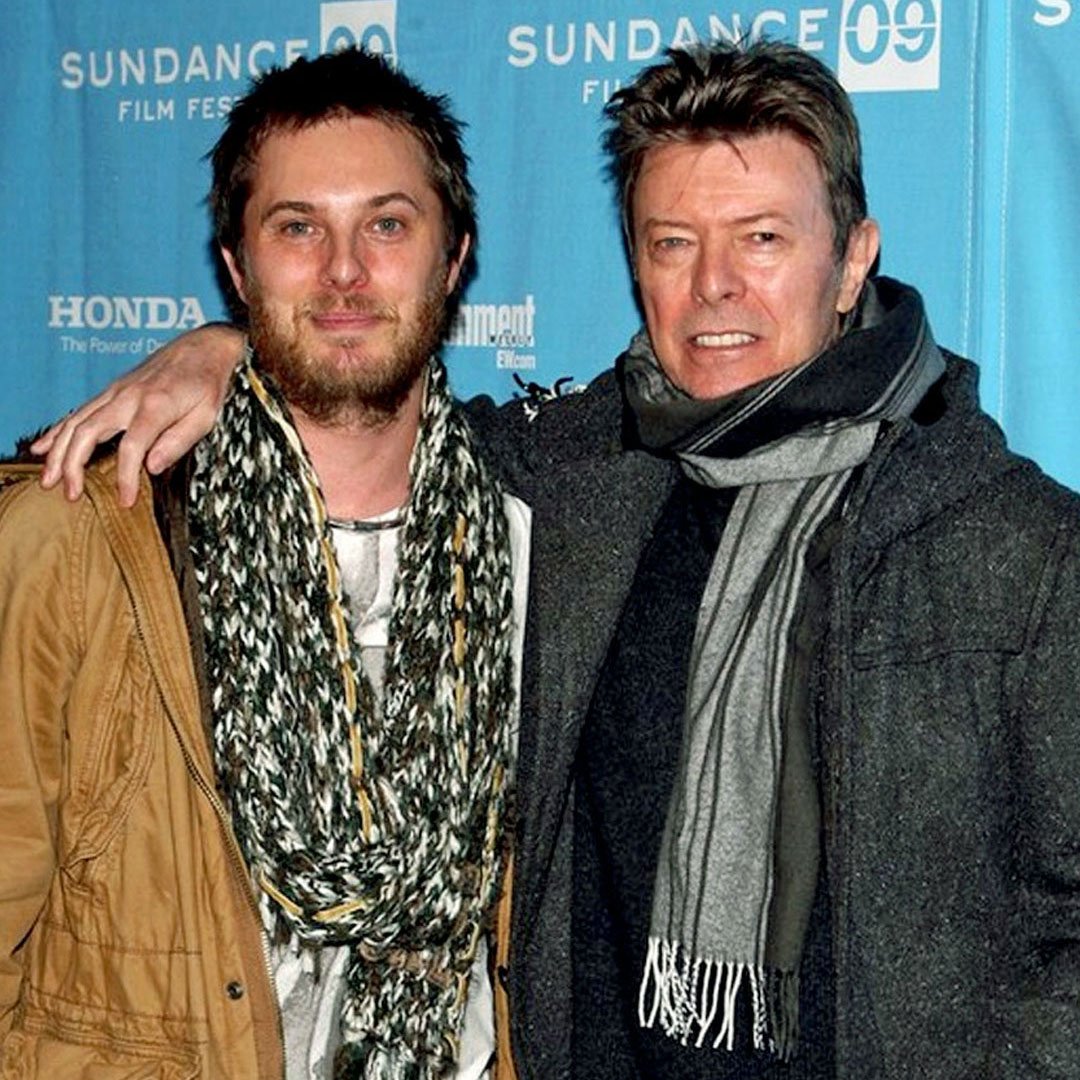
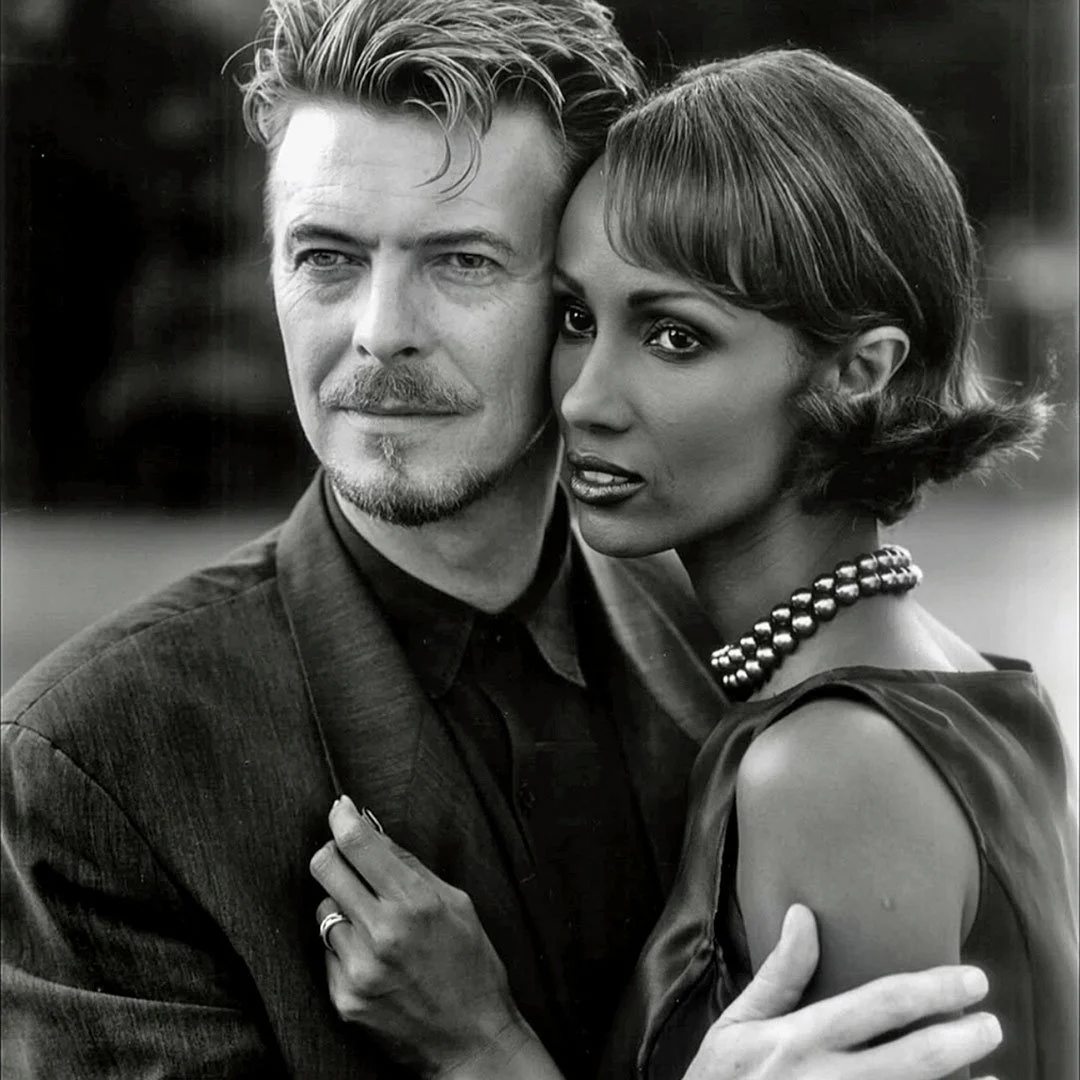
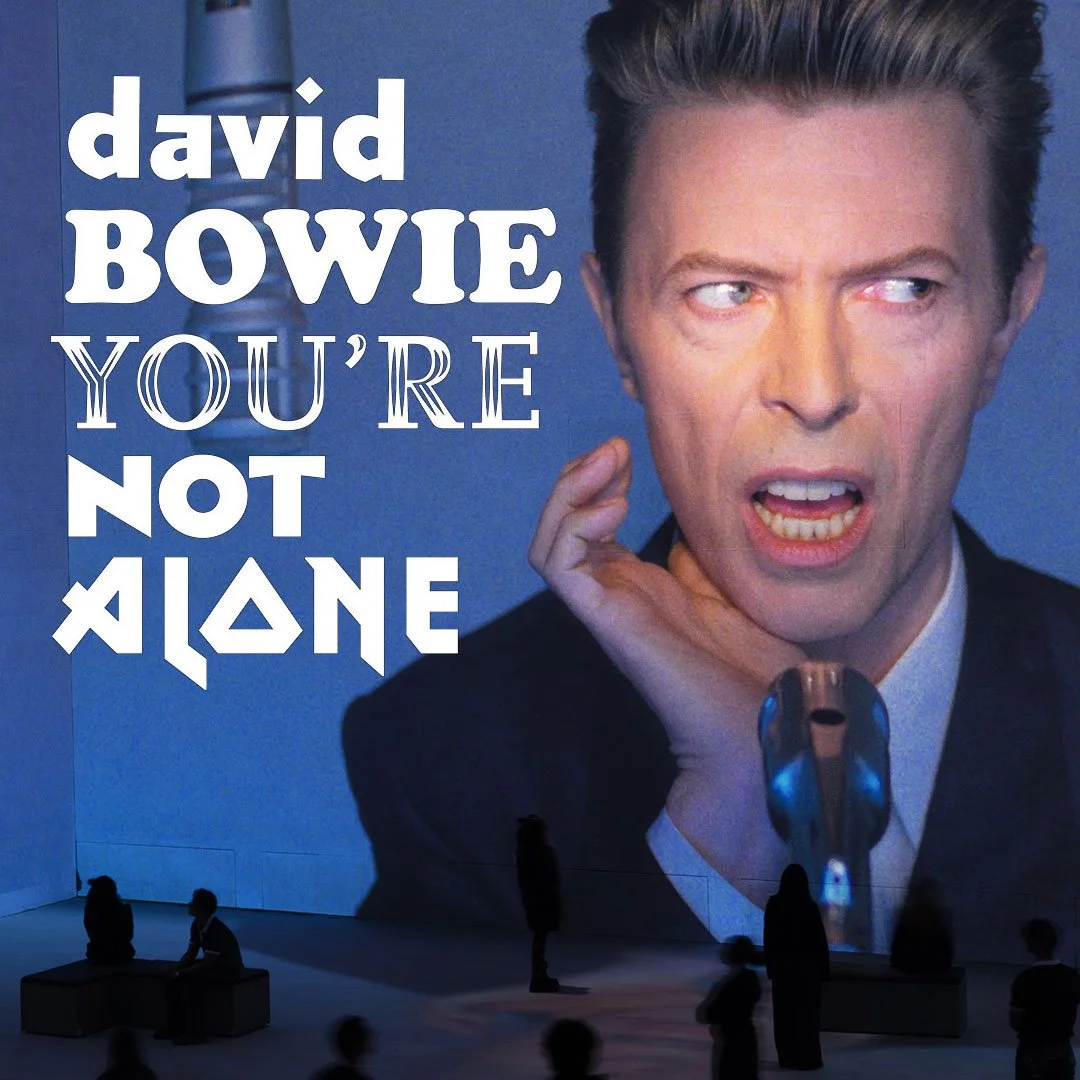
‘Scary Monsters (and Super Creeps)’ at 45: A Track-by-Track Guide to David Bowie’s Uncompromising Art-Rock Masterpiece

An art-rock manifesto for a new era, ‘Scary Monsters (and Super Creeps)’ was the benchmark album against which all future David Bowie records would be compared.

By Jason Draper

After spending the latter half of the 1970s traversing Europe, recording the ‘Low’, ‘“Heroes”’ and ‘Lodger’ albums in France, Germany and Switzerland, respectively, Bowie settled into New York City’s Power Station studio to lay down his first long-player of the 1980s. Angsty and hard-edged, ‘Scary Monsters (and Super Creeps)’ was, he said, “some kind of purge. It was me eradicating the feelings within myself that I was uncomfortable with.”

Bookended by two different versions of what Bowie described as a “protesty song, that showed that feelings of anxiousness about society are expressed on different levels and with different intensities”, the album unspooled across a tightly packed 45 minutes in which Bowie and his charges set the pace for the decade to come. Released on 12 September 1980, it also took Bowie back to the top of the UK album charts, asserting his place in the rock pantheon and rewarding a renewed outlook on life.

“I felt very positive about the future,” he said of the sessions that produced the record, “and I think I just got down to writing a really comprehensive and well-crafted album.”

‘Scary Monsters (and Super Creeps)’: A Track-by-Track Guide to Every Song

‘It’s No Game (No.1)’

A tape is wound into place, a Play button is pressed, and ‘Scary Monsters (and Super Creeps)’ opens with a churning art-rock groove and the dramatic intonations of Michi Hirota, reading a Japanese translation of the lyrics Bowie will soon start singing. As a creative bit of wrong-footing, it’s up there with the three minutes of controlled tension that open ‘Station to Station’, setting the scene for Bowie to enter with a deceptively ragged vocal. Almost screaming his words, the 1970s’ greatest trend-setter looks ahead to a new decade and, perhaps, wonders where he’ll fit (“I am barred from the event/I really don’t understand the situation”). Ten years earlier, he’d hit upon the melodic hook for ‘It’s No Game (No.1)’, in an acoustic demo titled ‘Tired of My Life’, and here he recycles a standout verse from that earlier song, delivering the lines “Put a bullet in my brain/And I’ll make all the papers” as a spiky riposte to tabloid sensationalism, rather than the weary summation of a quick route to fame that the younger songwriter presented them as. As ‘It’s No Game (No.1)’ devolves into atonal guitar and Bowie’s yells for the player – Robert Fripp, reprising his role from the ‘“Heroes”’ sessions – to “Shut up!”, the album has set out its stall: Bowie isn’t playing around.

‘Up the Hill Backwards’

Bowie proved he could put the Bo Diddley beat to new use on ‘Aladdin Sane’’s ‘Panic in Detroit’, and on ‘Up the Hill Backwards’ he has drummer Dennis Davis toy with the classic rock’n’roll-era rhythm before the song opens up into its spacious verses, complete with group vocals, in which Bowie seems to meditate on the creative act (“The vacuum created by the arrival of freedom/And the possibilities it seems to offer”), affirm the artist’s right to privacy (“It’s got nothing to do with you, if one can grasp it”) and nod to the fate that awaits us all (“Earth keeps on rolling, witnesses falling”). And yet, he seems to conclude, our worldly travails can be surmounted (“Yeah, yeah, yeah/Up the hill backwards/It’ll be alright”). Fripp is again on hand to rough up the outro, while producer Tony Visconti adds a ‘Low’-like reverb to Davis’s drums as the short but effective track wanders towards its fade out.

‘Scary Monsters (and Super Creeps)’

No such space to roam here: ‘Scary Monsters (and Super Creeps)’ speeds into view on screaming guitar, a barking-like keyboard sound effect and one of the finest exaggerated mockney vocals Bowie ever committed to tape. Urban paranoia collides with psychological uncertainty in a song that takes no prisoners, Bowie’s protagonist offering “a dangerous mind” in the place of love, and seemingly kicking his partner out of her own home before “running scared” himself from the monstrosities – real or imagined – that plague him. A closing chant gives ‘Scary Monsters’ a curiously upbeat ending, as if all this chaos is to be revelled in – and why not? Bowie, Visconti and his rhythm section of Carlos Alomar (guitar), George Murray (bass) and Dennis Davis consolidate everything they learned from the “Berlin trilogy” into five minutes of organised anarchy that grabs listeners by the throat and refuses to let go.

‘Ashes to Ashes’

Murray’s popped bass sits at the centre of this slice of zero-gravity space-funk, as Bowie fires the starting gun on the 1980s, earning himself his second UK No.1 single and handing the fledgling New Romantics a roadmap for their own art-pop aspirations. In a masterfully meta move, he opens the song by referencing his breakthrough hit and belated first UK chart-topper, ‘Space Oddity’, re-introducing to the world protagonist Major Tom, the one-time heroic “Action Man” of the late-1960s’ space race. Last seen “floating in my tin can”, Tom is now “a junkie/Strung out in heaven’s high/Hitting an all-time low”. A cautionary tale, a cry for help and a crash course in avant-pop perfection, ‘Ashes to Ashes’ would have remained a masterpiece on its own terms, however Bowie chose to present it. That he gave it a cutting-edge promo video that singlehandedly ushered in the MTV era was just a bonus. Shot on Pett Level Beach, on the Sussex coast, and featuring appearances from London’s Blitz Club scenesters Steve Strange, Darla-Jane Gilroy, Judi Frankland and Elise Brazier, the clip’s jump cuts, post-production effects and oblique narrative enhanced Bowie’s world-building lyrics, proving that Bowie had mastered the art of the pop promo before anyone really knew what a pop promo was.

‘Fashion’

If ‘Ashes to Ashes’ revealed what had become of Bowie’s once hopeful alter ego, ‘Fashion’ sneered at all those who would look to the former Starman for inspiration, copying his mannerisms and adopting his stances as if it were so much mindless gameplay. Early lyrics such as “Hell up ahead, burn a flag/Shake a fist, start a fight” have fed into theories that fascism was also squarely in Bowie’s sights, with the “goon squad” of the song’s chorus simply following orders to “Turn to the left/Turn to the right” as commanded over a squelchy beat. Bowie’s stated intention, however, was to “suggest more of a gritted teeth determination and an unsureness” about society’s slavish chasing of trends. Again, a promo clip rounded things out: where the Blitz Kids added to the otherworldly nature of the ‘Ashes to Ashes’ video – not least Steve Strange, whose portentous one-armed bow became a notable feature, repurposed by Bowie in the ‘Fashion’ promo – Manhattan’s self-conscious club-goers are sent up for ridicule here, as even the most absurd gestures are taken up by a horde of hopeless fashionistas who line the street for food handouts as desperately as they fill the New York City clubs, looking for a cultural sustenance they seem unable to find on their own.

‘Teenage Wildlife’

Robert Fripp’s soaring guitar might recall his work on ‘“Heroes”’, but the slow-burning ‘Teenage Wildlife’ is an altogether more caustic creation, Bowie dismissing his imitators (“Same old thing in brand-new drag”) and slipping loose from their demands of him (“You’ll take me aside and say/‘Well, David, what shall I do? They wait for me in the hallway’/I’ll say, ‘Don’t ask me, I don’t know any hallways’”). And yet there is more to the song than a simple extension of ‘Fashion’’s battle lines. Telling ‘NME’ that the “midwives to history” who “put on their bloody robes” were symbolic entities, Bowie allowed, “We all have them… They’re the ones who would not have you be fulfilled,” indicating that ‘Teenage Wildlife’ goes beyond mere generational finger pointing and into a more private realm in which trials are overcome, but not without struggle.

‘Scream Like a Baby’

A reworking of ‘I Am a Laser’, a brittle funk number that Bowie first recorded in the mid-1970s for his short-lived side project The Astronettes, ‘Scream Like a Baby’ is a brooding return to the dystopian cityscapes of ‘Diamond Dogs’, as filtered through the synth-pop of the early 1980s. With as clear a lyrical narrative as the ‘Scary Monsters’ album offers, the song bears witness to the persecution of a protagonist who “mixed with other colours”, describing the militant beatings meted out to “faggots” who are “thrown into the wagon/Blindfolded, chains and… stomped on” before being stripped of their clothing and “pumped… full of strange drugs”. Bowie’s incomplete stuttering on the line “Now I’m learning to be a part of societ – societ – s – ” and his varispeed vocals at the point of desperate escape (“He jumped into the furnace/Singing old songs we loved”) place these characters in the lineage of cracked personalities that litter his 1970s work and who are pushed to breaking point by authoritarian regimes.

‘Kingdom Come’

A cover of a song by Television co-founder Tom Verlaine, ‘Kingdom Come’ sits comfortably among the more despairing material that makes up much of the second half of ‘Scary Monsters (and Super Creeps)’, Bowie’s arrangement deepening the textures of Verlaine’s choppy original in a way that tightens the net on a narrator struggling with the futility of his actions. If, towards the start of the album, Bowie could take going “up the hill backwards” in his stride, here a life of hard graft – “Yes, I’ve been breaking these rocks/What’s my price to pay?” – raises questions about the meaning of it all, as Bowie, perhaps also channelling the imprisoned protagonist of ‘Scream Like a Baby’, prays for deliverance.

‘Because You’re Young’

Despite admitting that ‘Because You’re Young’ was partly inspired by having a nine-year-old son at the time of writing the song, Bowie refused to let sentimentality blind him from the woes that would likely befall his firstborn. There may be traces of yearning in the chorus – “Because you’re young/You’ll meet a stranger some night/Because you’re young/What could be nicer for you?” – but there are more than a few stings in the verses, as Bowie surveys the ruins of an adolescent relationship and finds little comfort. “She took back everything she said/Left him nearly out of his mind,” he sings, as if it was all so inevitable, before tallying “a million dreams” against “a million scars” in a song that doesn’t so much offer advice as sound a note of warning.

‘It’s No Game (No.2)’

Taken at a more measured pace than it’s opening counterpart, ‘It’s No Game (No.2)’ is, on the face of it, a considered end to an album which, Bowie said, “takes you through a lot of the doubting and the dilemmas that I, myself, as a writer find myself in”. Listen closer, however, and although Robert Fripp’s guitar and Michi Hirota’s vocals are removed, giving the song a less claustrophobic feel, many of the same lyrical concerns remain, the track ultimately acting more like a full-circle moment rather than a cathartic resolution. It was, Bowie explained, an expression of “what happens when a protest or an angry statement is thrown against the wall so many times that the speaker finds that he has absolutely no more energy to give it any impact any more”. As the tape that opened the record spools to the end, Bowie seems to be saying that it may not be possible to settle matters, but it might become possible to live with them.

#BowieScaryMonsters

tags: 2025 September
Friday 09.12.25
Posted by Mark Adams
 

ICGEA OUT NOW

“That's the message that I sent...”

As you’re likely aware, the final era box set, I Can’t Give Everything Away (ICGEA), is released today.

Available here.

#BowieICGEAbox

tags: 2025 September
Friday 09.12.25
Posted by Mark Adams
 

DAVID BOWIE CENTRE TICKETS AVAILABLE THURSDAY

Those of you subscribed to the V&A for ticket information will already be aware of this latest update.

+ - + - + - + - + - + - + - + - + - + - + - + - +
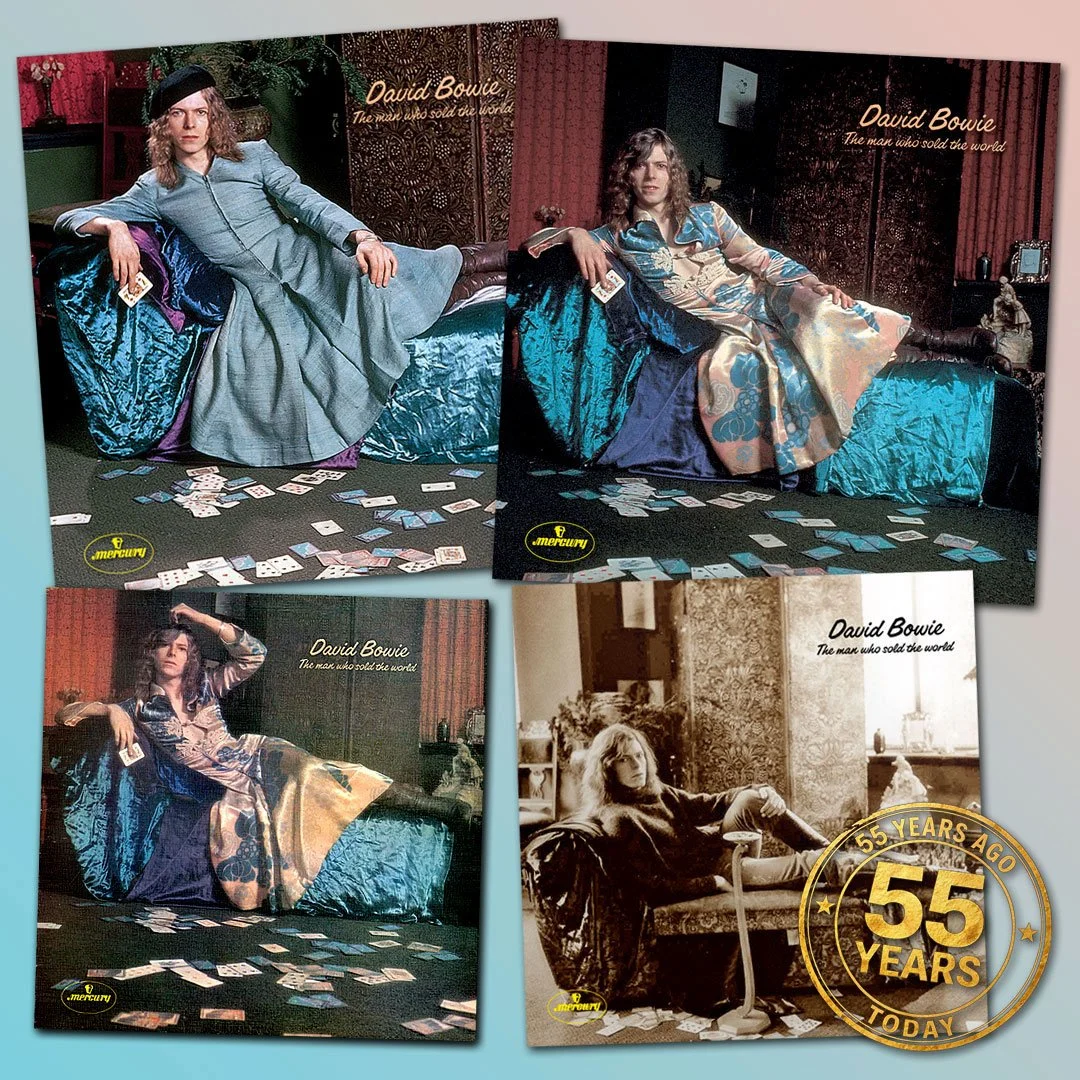
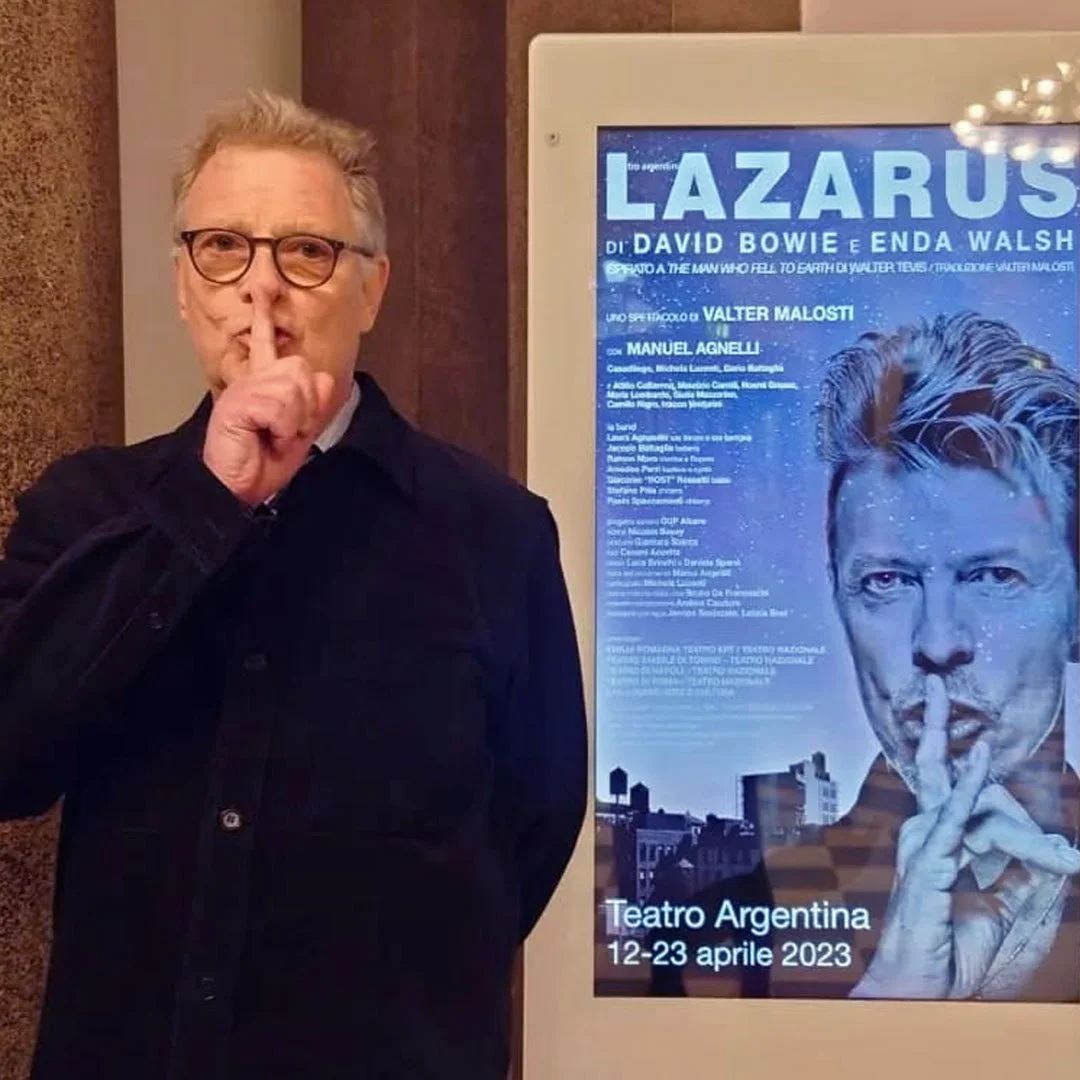
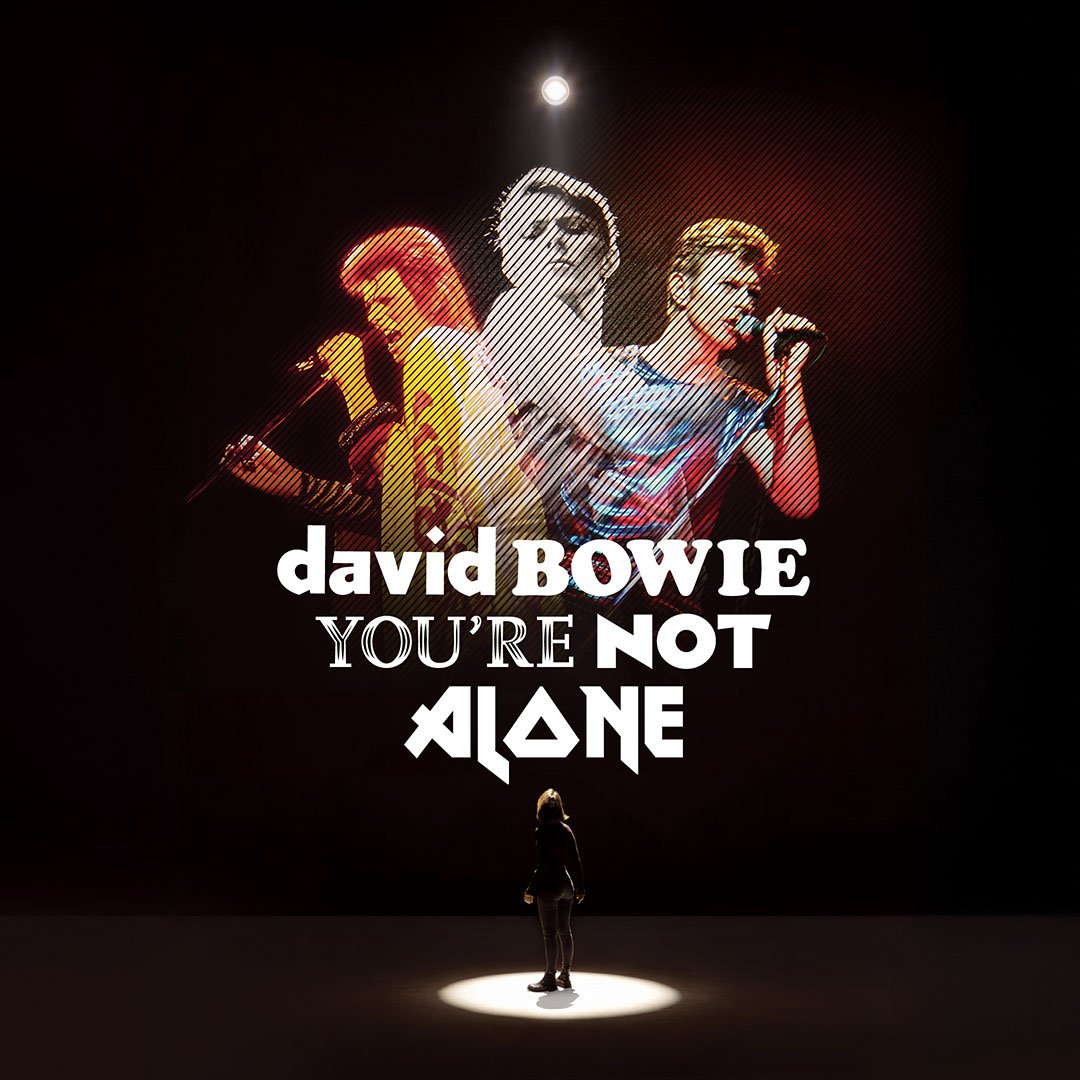
Dear Bowie fans – tickets for the David Bowie Centre at V&A East Storehouse will now go on general release from 10am BST tomorrow, 4th September, via this link.

Thank you for your continued patience and support.

+ - + - + - + - + - + - + - + - + - + - + - + - +

📸 Mick Rock 1972

#DavidBowieArchive #DavidBowieCentre #VnAEastStorehouse

tags: 2025 September
Wednesday 09.03.25
Posted by Mark Adams
 

DAVID BOWIE CENTRE TICKET UPDATE

Message from V&A East Storehouse regarding tickets for The David Bowie Centre. Tickets were unavailable today and won’t be tomorrow either.

+ - + - + - + - + - + - + - + - + - + - + - + - +

We’ve been unable to completely resolve issues affecting the V&A ticketing system. Due to these ongoing problems and to ensure that everything is working properly, we will not be releasing tickets tomorrow, 3rd September.

We will continue to update via @vam_east (on Instagram) when tickets will be available to book.

We know a lot of Bowie fans are looking forward to being the first to visit during the opening 6-weeks, and we appreciate you bearing with us. while we sort out these issues.

We’ll ensure to give you as much notice as possible via @vam_east, to give you the best chance to book the tickets you want.

Thank you for your continued patience.

+ - + - + - + - + - + - + - + - + - + - + - + - +

📸 Tony McGee 1983

#DavidBowieArchive #DavidBowieCentre #VnAEastStorehouse


tags: 2025 September
Tuesday 09.02.25
Posted by Mark Adams
 

DAVID BOWIE CENTRE FREQUENTLY ASKED QUESTIONS

The David Bowie Centre at V&A East Storehouse will open to the public on Saturday 13th September 2025.

Access to the David Bowie Centre is free (£5 optional donation) and ticketed, with tickets being released from 10:00 AM next week on Tuesday 2nd September.

This allocation will be for visits between 13th September and 26th October. More tickets will be released every six weeks so there will be many more opportunities to get them if you’re unsuccessful with this first batch.

Here’s a link to a FAQ page hopefully answering most of your questions.

The FAQ covers the following subjects:

~ What is the David Bowie Centre?

~ I want to visit the David Bowie Centre, do I need to book a ticket?

~ Why is the David Bowie Centre ticketed?

~ I'm a Member, do I need to book a ticket?

~ Should I book a ticket for my child?

~ Do I need a ticket to visit Storehouse?

~ I can't find my e-tickets. What do I do?

~ Tickets are sold out online. When will more be available?

~ How do I see things that aren’t on display?

~ Is the David Bowie Centre step free / wheelchair accessible?

~ Are there flashing lights within the space?

~ I have more questions about V&A East Storehouse. Where should I look?

The first batch of members’ priority tickets have now all been allocated.

The image we’ve posted is detail from a 1973 Mick Rock shot from the vam_east Instagram page.

📸 Mick Rock

#DavidBowieArchive #DavidBowieCentre #VnAEastStorehouse #BowieMickRock

tags: 2025 August
Friday 08.29.25
Posted by Mark Adams
 

DANCING IN THE STREET UPGRADED 4K VIDEO WITH PREVIOUSLY UNSEEN FOOTAGE

“Just as long as you are there ...”

The headline says it all, keep reading for the full press release and links.

#BowieJaggerDITS

DAVID BOWIE & MICK JAGGER - DANCING IN THE STREET

40th ANNIVERSARY - LIMITED EDITION REMASTERED WHITE VINYL 12” OUT NOW ON PARLOPHONE RECORDS

WATCH THE 12” REMIX UPGRADED 4K VIDEO FEATURING UNSEEN FOOTAGE HERE NOW

40 years ago this week, the David Bowie and Mick Jagger duet of the Motown classic, “Dancing In The Street” was released with all the proceeds benefiting famine relief. The track and video had been debuted six weeks earlier during Live Aid, the benefit concert organised by Bob Geldof and Midge Ure to raise further funds for the relief of the famine in Ethiopia.

The video, which, like the song, had been recorded and filmed in thirteen hours, only fourteen days earlier, was shown just before Bowie took to the stage at Wembley Stadium. The making of the video was documented at the time, but that footage has mainly remained unseen until today. The new 4K video for the Steve Thompson Mix remix of the track features behind-the-scenes footage from the late-night shoot at Spillers Millennium Mills in the East End of London.

The single version of the song was released on 27th August, with all the proceeds benefiting famine relief. It topped the UK Singles Chart for four weeks and reached No. 7 in the United States on the Billboard Hot 100.

To celebrate the 40th anniversary of ”Dancing In The Street,” a limited edition white vinyl 12" is available now, bringing together every one of the song's mixes for the first time. As with the original, 30% of the retail price from the sale of this single, representing royalties and proceeds, will be donated to the Band Aid Charitable Trust by David Bowie, Mick Jagger and Parlophone Records.

Talking about the collaboration, Mick Jagger comments ‘’We had such a laugh doing ‘Dancing in the Street’ with both the song recorded in the studio and the video done in one day. Remarkable how we pulled it off really. The video is hilarious to watch now. We enjoyed camping it up and trying to impersonate each other’s moves, making it up as we went along. It was the only time David and myself collaborated on anything, which is a real shame.”

Speaking about the song and video at the time, Bowie said “We thought about it on a Thursday night and we just went through a bunch of old songs and thought that ‘Dancing’ was one we both knew very well and then we went into the studio between 7 and 11 on Saturday night and then we went over to the Docklands and shot the video for the rest of the night so we did the whole thing in ten hours, it was great.” He also talked about the spirit of Live Aid, saying “Everybody out there who sent money in, you’re the real heroes because it’s easy for me to go up there and sing some songs, but it’s much harder for you to give money and not be recognised. Good on ya!”

DAVID BOWIE & MICK JAGGER

DANCING IN THE STREET 40th ANNIVERSARY WHITE VINYL TRACKLISTING

SIDE ONE

Dancing In The Street (Clearmountain Mix) (3.11)

Dancing In The Street (Instrumental) (3.17)

Dancing In The Street (Steve Thompson Mix) (4.42)

SIDE TWO

Dancing In The Street (Edit) (3.24)

Dancing In The Street (Dub) (4.43)

DAVID BOWIE & MICK JAGGER - DANCING IN THE STREET - 40th ANNIVERSARY

LIMITED EDITION REMASTERED WHITE VINYL 12” - OUT NOW ON PARLOPHONE

tags: 2025 August
Friday 08.29.25
Posted by Mark Adams
 

GOODBYE JOE STEVENS

Sad to learn of the passing of American photographer, Joe Stevens, who died on Tuesday.

Fans of a certain vintage will remember well Joe’s images which graced the pages of NME in the seventies, including several front covers.

We’ve selected a few random 1973/1974 images from Joe’s vast Bowie collection which you can find here on Instagram.

We’ll leave you with a bit from an interview with Joe following David’s death in 2016...

+ - + - + - + - + - + - + - + - + - + - + - + - +

“Of all the big shots I’ve known – the lead singers, front men, pop stars, the people that call the shots … he was my best friend. I loved David. He was so special. I’m still mourning. Getting the photos together for this show makes me so sad. It hurts to think that I can’t walk around New York City and bump into him anymore …”

+ - + - + - + - + - + - + - + - + - + - + - + - +

Our thoughts are with his friends and family.

#RIPJoeStevens #BowieNME

tags: 2025 August
Wednesday 08.27.25
Posted by Mark Adams
 

NEVER GET OLD HD UPGRADE

“I think about this and I think about personal history...”

Originally released in 2003 on the Reality album, the defiant rocker, Never Get Old, was issued as a downloadable single and only got a full physical release as a CD single in Japan. it was a promo only CD in Europe, America, Canada, Australia and Brazil.

So, it’s unusual that a video was made for it. But we’re glad it was, and you can view the HD upgrade here.

#ICGEAAlbumFocusReality #BowieNeverGetOld

tags: 2025 August
Thursday 08.21.25
Posted by Mark Adams
 

WATERLOO SUNSET NOW AVAILABLE TO STREAM

“Waterloo sunset’s fine...”

Bowie’s cover of The Kinks’ classic Waterloo Sunset is released as a digital single today, 15th August.

Originally issued as a bonus track on the Japanese edition of Reality, the song was also made available in Europe via the promo CD of Never Get Old and on the limited CD+DVD Tour Edition of Reality.

Bowie had performed the song with its composer, Kinks’ main man Ray Davies, at the Tibet House Benefit concert in February 2003, before recording it for posterity a few months later.

You can now find it on streaming here, where you can also find a link to the visualizer on YouTube.

📸 Bowie at the Tibet House Benefit 2003, by Dimitrios Kambouris.

#ICGEAAlbumFocusReality #BowieICGEAbox #BowieReality #BowieWaterlooSunset #BowieRayDavies

tags: 2025 August
Friday 08.15.25
Posted by Mark Adams
 

HAPPY 80TH TO MIKE GARSON

“I am the best Jazz you’ve ever heard...”

Many happy returns of the day to the wonderful Mike Garson on his 80th birthday. He’s the one Gail Ann Dorsey is pointing at here. (Like you didn’t know)

We’re sure everybody reading this will want to join us in thanking Mike for his incredible work with Bowie and in wishing him a splendid day.

We’ll leave you with Mike’s very own favourite Bowie moment, and there are so many to choose from.

It’s a heartbreakingly emotional rendition of My Death from almost thirty years ago, September 18th 1995. The occasion was a benefit for The Joseph Papp Public Theater, at The Grand Ballroom, Manhattan Center, New York.

Over to Mike from a piece he wrote about the recording for us in 2020...

+ - + - + - + - + - + - + - + - + - + - + - + - + - + - +

This version of MY DEATH might be the most poignant version ever. David’s voice is low and rich and creamy.

Not too many fans no less the world have heard this. It is beyond gorgeous. David and I performed this in NYC for a fund raiser in 1995.

I never understood why David and I never did a duet tour. Hopefully posthumously we can put out all the songs the 2 of us did together over the years.

I think you might be able to play this song 100 times and never stop crying.

Mike Garson

+ - + - + - + - + - + - + - + - + - + - + - + - + - + - +

You can hear the performance here on YouTube.

Picture by Mark Adams (@blamsnap)

#MikeGarson80 #BowieGarson

tags: 2025 July
Tuesday 07.29.25
Posted by Mark Adams
 

BOWIE’S ELEPHANT MAN DEBUT 45 YEARS AGO TODAY

“He’s a broken man...”

Forty years ago today, following an announcement in The New York Times, David Bowie took to the stage in a different guise to the one he had been more used to...as John Merrick in the Jack Hofsiss directed stage play of The Elephant Man by Bernard Pomerance.

The Elephant Man opened on 29th July 1980 at the Denver Centre of Performing Arts.

Here’s a line from a review in Variety:

“The acting debut on the American stage of rock singer David Bowie was greeted by a standing ovation in Denver when the singer, noted for his flamboyant musical style, took on the role of physically misshapen John Merrick, the human monster with a liking for culture.”

Bowie went on to triumph on Broadway with his stunning performance at The Booth Theatre in New York, opening there on 23 September 1980, with unanimous praise for his portrayal of Merrick.

In an interview with BBC Radio 1’s Andy Peebles in December 1980, Bowie said:

“The whole thing happened so fast when they finally decided to take me as Merrick. I’d forgotten about the whole thing after Hofsiss had seen me. But I got a call within two weeks of having to go over and start rehearsal. So I couldn’t do very much. So I went to the London Hospital and went to the museum there. Found the plaster casts of the bits of Merrick’s body that were interesting to the medical profession and the little church that he’d made, and his cap and his cloak. Nothing much that you can get from that, just the general atmosphere. We didn’t know if I was going to get to New York, but for me it was the idea of doing a straight play that had the greater appeal.”

29 July - 3 August 1980 Denver Centre of Performing Arts

5 August 1980 - 31 August 1980 Blackstone Theatre, Chicago

23 September 1980 - 3 January 1981 The Booth Theatre, 222 W. 45th St, New York

#BowieElephantMan #ElephantMan45 #Bowie1980

tags: 2025 July
Tuesday 07.29.25
Posted by Mark Adams
 

IMAN SHARES MESSAGE FROM DAVID ON HER BIRTHDAY

“That's the message that I sent…”

We hope you’re having a beautiful birthday, Iman.

The birthday lady is pictured here a little over 20 years ago with her “hubby” during the 2005 CFDA Fashion Awards on 6th June, 2005, at the New York Public Library.

While we’re jumping around the decades, Iman kindly shared the contents of her 60th birthday card from David 10 years ago in 2015...

+ - + - + - + - + - + - + - + - + - + - + - + - + - +

happy birthday darling!!

60 years

It’s been a privalige* to have shared over a third of these with you

I love you!

David ¬- hubby xxx

+ - + - + - + - + - + - + - + - + - + - + - + - + - +

That same birthday, Iman posted the following on her socials: “My favourite age is now”, and who could disagree with that outlook?

* Who doesn’t have trouble with the spelling of privilege? it’s a tricky one.

#ImanBirthday #MessageFromTheActionMan

tags: 2025 July
Friday 07.25.25
Posted by Mark Adams
 

WOOD JACKSON NOW AVAILABLE TO STREAM

“And he'd play the tunes they call creative...”

You may have already spotted that Wood Jackson is released as a digital single today.

Originally issued as a bonus track on the Japanese edition of Heathen, the track was made available to European fans via the Slow Burn single, and in the UK on one of the formats of the Everyone Says 'Hi' CD single.

The song was never available on streaming until now, which means it may be a previously undiscovered gem for some of you.

This melancholic beauty certainly deserves more exposure, and some of those who already know the track have commented that it was a strong enough song that should have been included on Heathen in the first place.

You can find it on streaming here, where you can also view the visualizer on YouTube where the lyrics are included for your singalong pleasure.

#ICGEAAlbumFocusHeathen #BowieICGEAbox #BowieHeathen #BowieWoodJackson

tags: 2025 July
Friday 07.25.25
Posted by Mark Adams
 

UK FAME SINGLE IS FIFTY TODAY - READ JASON DRAPER’S SONG STORY

“Is it any wonder, you’re far too cool to fool...”

Released in early June 1975 in America, David Bowie’s first #1 in the country was the Bowie/Lennon/Alomar composition, Fame.

It didn’t fare quite so well in the UK, where it was released 50 years ago today, though it was still a top 20 hit.

A side: Fame (Bowie/Lennon/Alomar)

B side: Right (Bowie)

Original UK release date: July 18 1975

Highest chart position: UK: #17 US: #1

Originally appeared on: Young Americans

Produced by: David Bowie, Harry Maslin

Our good friend Jason Draper has written another of his informative and well-researched pieces titled: ‘Fame’: Behind The Bowie/Lennon Co-Write That Debunked The Myth Of Celebrity.

Jason describes the track thus: “A spur-of-the-moment recording with John Lennon, ‘Fame’ drew listeners in with its funky strut but carried a stark warning for anyone seeking the limelight.”

Scroll down to read the full thing.

#BowieFame #Bowie1975 #BowieYoungAmericans

‘Fame’: Behind The Bowie/Lennon Co-Write That Debunked The Myth Of Celebrity

A spur-of-the-moment recording with John Lennon, ‘Fame’ drew listeners in with its funky strut but carried a stark warning for anyone seeking the limelight. By Jason Draper

David Bowie had all but completed his ninth studio album when he began to preview material from it in the closing months of 1974. Pressed to acetate, the seven tracks he’d recorded, for a project he was then calling The Gouster, included the future classic ‘Young Americans’ and a disco-fied reworking of his 1972 tease ‘John, I’m Only Dancing’ (as ‘John, I’m Only Dancing (Again)’). But after playing the songs to John Lennon, Lennon’s then girlfriend, May Pang, and Paul and Linda McCartney at the Sheraton Netherlands Hotel in New York City, where he was lodging in early 1975, Bowie decided that at least one ex-Beatle could make for a key addition to the record. After deciding to lay down a cover of Lennon’s Beatles-era song ‘Across The Universe’, he invited the jaded songwriter to join him for a session which would lead to the impromptu creation of one of Bowie’s greatest songs of the era: an infectious – if scathing – funk number titled ‘Fame’.

Reflecting on the evening five years later, Lennon marvelled at the speed with which Bowie, who’d entered the recording studio with one purpose in mind, ended up achieving an entirely unforeseen objective. “I must say I admire him for his vast repertoire of talent,” Lennon told British radio DJ Andy Peebles in 1980. “I think he’s great. The fact that he could just walk into that and do that. I could never do that.”

The backstory: “I’d had very upsetting management problems”

Although ‘Fame’ seemed to come out of nowhere, its subject matter was rooted in lengthy conversations that Bowie had shared with Lennon in the months prior to its recording. Introduced to Lennon the previous September, while at a party thrown by actress Elizabeth Taylor, Bowie was conscious that the man standing before him, and whom he had namechecked three years earlier in his Hunky Dory song ‘Life On Mars?’, had, after struggling with the demands of “Beatlemania”, spent the last half decade reassessing his priorities as a solo artist. “Don’t mention The Beatles,” Bowie told himself at that first meeting, “you’ll look really stupid.”

Perhaps overcompensating, Bowie’s opening gambit at least made clear his respect for Lennon’s forward-facing attitude: “I’ve got everything you’ve made – except The Beatles.”

During subsequent get-togethers in the bars and clubs of New York City, the pair would trade stories about their experiences with fame – the personal sacrifices made to achieve it, and the dangers of misjudging those who would leech from it. “I’d had very upsetting management problems and a lot of that was built into the song,” Bowie told Q magazine in 1990, admitting that “a degree of malice” was present in ‘Fame’’s lyrics. Together, however, Bowie and Lennon shared a generosity of spirit, and Bowie gratefully received his new friend’s advice that he do away with management altogether.

“I think if you have even just a modicum of intelligence, you’re going to know what it is you are and where you want to go,” he told Performing Songwriter in 2003. “Once you know that, you just bring in specific people for specialist jobs.”

He could have been thinking of Lennon himself when he said those words. Arriving at Electric Lady Studios on 30 January 1975, the former Beatle ended up being a very specific kind of specialist.

The recording: “It all came together so quickly and so brilliantly”

Initially booking the facilities for his recording of ‘Across The Universe’, Bowie realised he had a rare chance to create something new with Lennon, who’d agreed to add rhythm guitar to the cover because, as he would tell Melody Maker a little more than a month later, “I’d never done a good version of that song myself.” After dispatching ‘Across The Universe’ with minimum fuss, Bowie decided to take the chance “by the horns”, as he put it, and approached Lennon with his pitch: “Let’s write something!”

As Bowie’s lead guitarist and future bandleader Carlos Alomar began playing with a riff he’d worked up for live performances of The Flares’ 1961 R&B cut ‘Foot Stomping’ – a nightly part of Bowie’s Soul Tour of late 1974 – Lennon started singing the word “fame” on top, and Bowie retired to the control room to write lyrics. Drawing on his recent discussions with Lennon and on his experience with the management team he was in the process of leaving, Bowie began to list the reasons why he felt “fame itself” was “not a rewarding thing”: “What you get is no tomorrow”, “What you need you have to borrow” he noted before summing up the cutthroat nature of the entertainment industry with a question: “Is it any wonder I reject you first?”

Embracing the moment, Bowie, Lennon and Alomar pieced the song together at breakneck speed. “It all came together so quickly and so brilliantly,” Bowie later explained. “It was an incredibly intoxicating time.” “We just sort of – oh, boom, boom, boom – like that,” Lennon said elsewhere. “It wasn’t like sitting down to write a song. So we made this lick into a song is what happened.”

Capturing the destabilising nature of celebrity – what Bowie would describe to Musician magazine as the realisation that fame “isn’t everything it should have been” and that living in the public eye is “like not having a life of your own any more” – producer Harry Maslin and studio engineer David Thoener manipulated the tapes in order to warp the sound of the song. After asking Lennon to hold a specific piano chord for as long as he could, Maslin flipped the multitrack upside down, to give ‘Fame’’s opening seconds a backwards-sounding effect (“The Beatles never did it that way,” Lennon teased). For his part, Thoener slowed the tape down when recording Lennon’s “Fame” vocal retorts, leading them to take on a mockingly high pitch when the tape was played back at the correct speed. Reflecting on Lennon’s crucial touch, Bowie would tell Melody Maker, “It was more the influence of having him in the studio that helped. There’s always a lot of adrenalin flowing when John is around… The riff came from Carlos, and the melody and most of the lyrics came from me, but it wouldn’t have happened if John hadn’t been there. He was the energy, and that’s why he’s got a credit for writing it; he was the inspiration.”

The release and legacy: “Of course David Bowie had funk!”

Running to a little more than four minutes, ‘Fame’ was a hypnotically funky song that neatly encapsulated Bowie’s caustic view of the celebrity lifestyle while also further developing the “plastic soul” sound he’d worked up in Philadelphia’s Sigma Sound Studios the previous summer, when he’d recorded the Gouster material he’d first played to Lennon at the Sheraton Netherlands Hotel. So enthused was Bowie by the results of his Lennon collaboration, he immediately rethought the entire album, making space for both new recordings and promoting the song ‘Young Americans’ to the status of title track. Placed at the album’s end, ‘Fame’, with its cocksure strut and taunting closing lines – “Fame/What’s your name?” – was an unavoidable earworm that stuck in listeners’ heads long after the fade.

Building on the success of ‘Young Americans’, which had given Bowie his breakthrough US hit in May 1975 when it peaked at No.28, ‘Fame’, issued as the second single from its parent album, topped the Billboard Hot 100 in June, scoring Bowie his first stateside No.1. (Released in the UK on 18 July, the single would go Top 20 in Bowie’s homeland.) Confirming his status as a crossover star capable of reaching rock and soul audiences, the song caught the attention of “The Godfather Of Soul”, James Brown, who, perhaps nodding to Carlos Alomar’s stint in his own band during the late 60s, based his December 1975 single, ‘Hot (I Need To Be Loved, Loved, Loved, Loved)’, almost entirely on the track.

At the vanguard of a whole other funk movement, George Clinton name-checked Bowie on ‘P. Funk (Wants To Get Funked Up)’, the lead track from Mothership Connection, the career-making album by his group Parliament. Speaking to FADER four decades on from its release, Clinton, whose own music would be treated as a foundational source for hip-hop, acknowledged that ‘Fame’ had had a direct influence on Mothership Connection, particularly the album’s US Top 20 hit ‘Give Up The Funk (Tear The Roof Off The Sucker)’. “I was biting off David Bowie,” he admitted. “‘Faaaame!’ ‘Weeeeee want the funk!’… I just added the silent parts that he didn’t say. It’s the same feel. Of course David Bowie had funk! You don’t know David Bowie if you ask whether he had funk.”

Bowie himself would use ‘Fame’ for parts when it came to revisiting his own work for the hits-based Sound+Vision Tour of 1990. Remixed as ‘Fame 90’, this updated take went Top 30 in the UK and gave Bowie the chance to consider the song’s impact in an entirely new era. “It covers a lot of ground, ‘Fame’,” he told Q magazine. “It stands up really well in time. It still sounds potent. It’s quite a nasty, angry little song. I quite like that.”

Buy the ‘Young Americans’ 50th-anniversary vinyl reissues and merch at the David Bowie store.

tags: 2025 July
Friday 07.18.25
Posted by Mark Adams
 
Newer / Older